
Loading...
Serving Sheboygan, WI and surrounding areas. (920) 567-1812
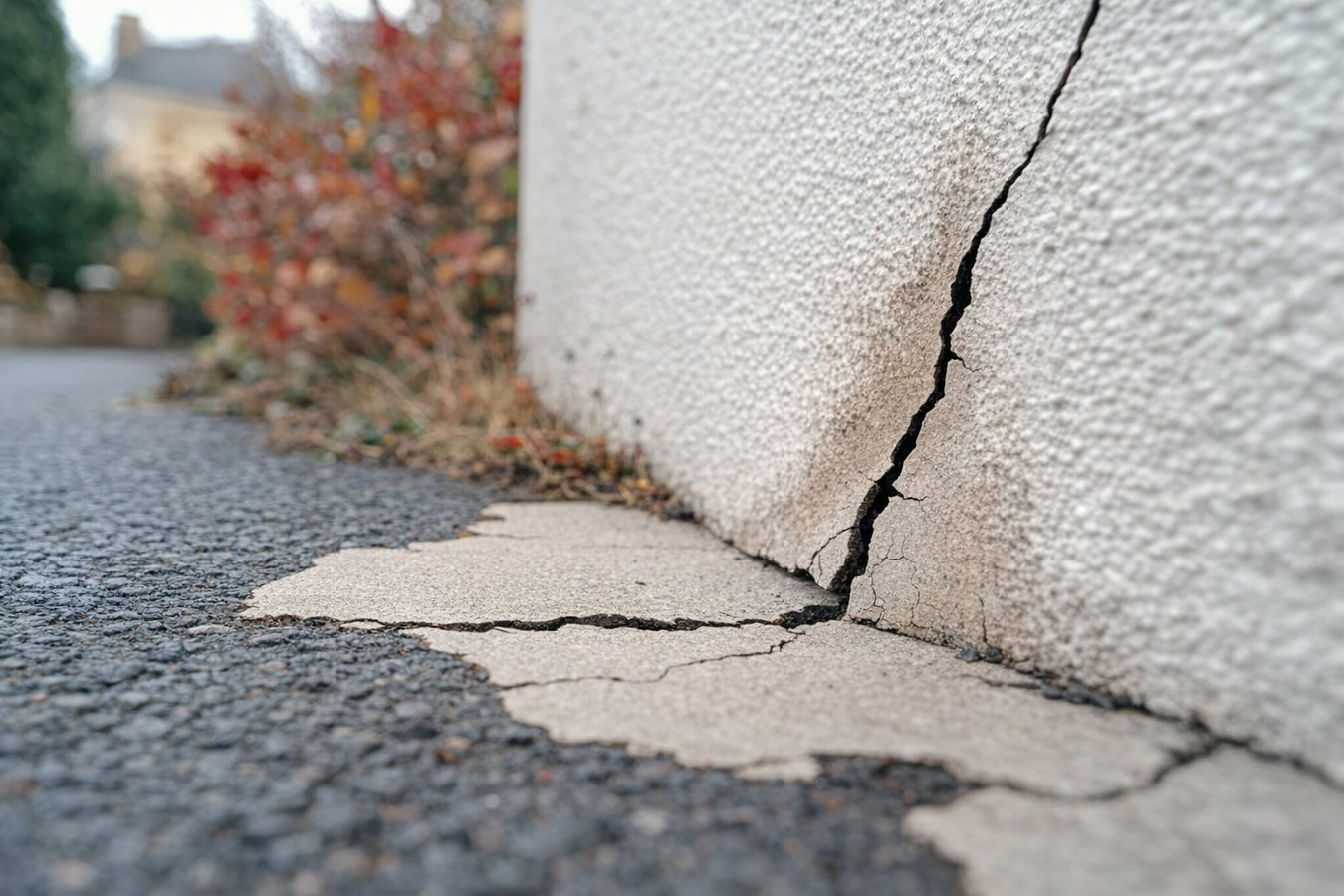
Sunken concrete is a common problem in Sheboygan. Clay soils and hard winters shift slabs over time. We lift them back into position so water drains away from your home and the tripping hazards disappear.
Foundation raising in Sheboygan is the process of lifting a sunken or uneven concrete slab back to its original level position by drilling small holes and pumping material underneath to fill voids, with most residential jobs completed in one day and the surface ready for foot traffic within hours.
If your garage floor, front stoop, or driveway has started pulling away from the house or rocking underfoot, you are dealing with a problem that gets worse - not better - on its own. Sheboygan's clay-heavy soils shift with every wet season, and the freeze-thaw cycle from November through March adds constant pressure to whatever is underneath. We use mudjacking and polyurethane foam injection to fill the voids and bring the slab back up. Homeowners who have concrete that is beyond saving can also ask us about our concrete cutting service, which removes damaged sections cleanly so a fresh pour can follow.
The honest first question is whether your slab is a good candidate for raising or whether replacement is the better long-term investment. We answer that question at the site visit - free, with no obligation - so you are not guessing.
If a door that used to swing freely now drags on the floor or will not latch properly after a Sheboygan winter, that is often a sign the foundation or slab beneath it has shifted. The freeze-thaw cycle can move concrete enough to throw a door frame slightly out of square. This is one of the most common first signs homeowners notice - and it is worth taking seriously rather than just planing the door.
Stand at the edge of your garage floor, front stoop, or patio and look at where the concrete meets the house. If you can see a gap that was not there before, the slab has dropped away from the structure. In Sheboygan's clay soils, this kind of separation can widen quickly once it starts, especially during wet springs.
A properly sloped slab directs water away from your home. If you notice puddles forming near your house after rain, or water running toward the foundation instead of away from it, your slab may have tilted inward. This is both a sign that raising is needed and a warning that water damage to your foundation could follow if it is left alone.
Walk slowly across your driveway, sidewalk, or patio and pay attention to any panels that rock slightly underfoot or feel noticeably higher or lower than those next to them. A difference of even half an inch is enough to create a tripping hazard - and in Sheboygan, where ice forms on uneven surfaces in winter, that risk is real.
We lift sunken concrete across residential properties in Sheboygan - garage floors, front stoops, driveways, sidewalks, patios, and interior basement slabs. The two methods we use are mudjacking, which pumps a cement-and-soil slurry beneath the slab, and polyurethane foam injection, which uses a lightweight expanding foam that cures faster and adds less weight to the soil. We choose the right method for each job based on the slab size, the soil conditions, and what will perform best through future Sheboygan winters. Homeowners considering a new slab foundation after major settling can also ask about our slab foundation building service when replacement is the right call.
Raising costs significantly less than tearing out and pouring new concrete - often a fraction of the replacement cost - when the existing slab is structurally sound. We confirm that during the site visit and give you a written estimate that breaks down the scope so you know exactly what you are paying for before we start. The Concrete Foundations Association publishes best-practice guidance on slab lifting methods that we follow on every project.
The proven, cost-effective choice for larger areas like garage floors and driveways where the concrete is structurally sound but has settled.
Suits homeowners who want faster curing, less added weight on the soil, and a lighter footprint around landscaping or finished areas.
Ideal for front stoops and steps that have pulled away from the house entrance - a common problem in Sheboygan homes built before 1970.
For interior concrete that has settled unevenly, creating uneven floors and gaps at the wall - common in homes near Sheboygan's lakefront and river corridors.
Sheboygan sits on the western shore of Lake Michigan, and the combination of glacially deposited clay soils and the region's hard winters creates conditions that are genuinely tough on concrete slabs. Clay absorbs water and swells when it rains, then shrinks and pulls away from structures when it dries. Every wet spring followed by a dry summer moves the ground slightly, and after years of that cycle the voids under your concrete grow large enough that the slab begins to drop. This is not a sign of poor construction - it is a predictable result of where we live. Homeowners in Sheboygan and the surrounding area deal with this more frequently than homeowners in climates with sandier, more stable soils.
Homes built between the 1920s and 1960s - which make up a large share of Sheboygan's housing stock - often have original concrete that has never been touched. After 60 to 80 Wisconsin winters, settling is the rule rather than the exception. Spring is the busiest season for foundation raising here, because the ground thaws unevenly and snowmelt saturates the soil, making existing problems suddenly obvious. Homeowners in Sheboygan Falls face the same clay soil conditions and benefit from addressing settling before each new winter.
When you call, we ask where the problem is, roughly how large the area is, and whether you have noticed any cracks or gaps. We schedule a site visit - usually free and about 20 to 30 minutes - and respond to new inquiries within one business day.
We walk the affected area with you, probe the soil around the slab edges, and look at the cracks and gaps to understand what is happening underneath. Before we leave, you receive a written estimate with a clear scope of work - not just a verbal number.
The crew drills small holes through the slab at strategic points - roughly the size of a quarter - then pumps material through those holes to fill the voids underneath and gradually lift the concrete back into position. The lifting is controlled and slow so we avoid overcorrecting.
Once the slab is level, we fill and patch the drill holes with a concrete mix, clean up the work area, and walk you through the finished result. You can typically walk on the surface within a few hours and drive on it within 24 hours.
We come out, walk the area with you, and give you a written quote before you decide anything. No pressure, no obligation.
(920) 567-1812Sheboygan's glacially deposited clay soils expand when wet and pull away when dry - and the freeze-thaw cycles from November through March add constant movement. We assess your specific soil conditions before recommending a method, so the lift accounts for what is actually causing the problem, not just the visible symptom.
Not every sunken slab should be raised, and we will tell you if replacement is the better call for your situation. In a city where homes from the 1920s through 1960s are common, original concrete is sometimes past the point where lifting makes sense - and you deserve a straight answer before spending money on a fix that will not hold.
We give you a written estimate after seeing the site - not a phone quote based on square footage alone. The number you agree to is the number you pay. The National Association of Home Builders recommends written estimates as the first protection for any homeowner hiring a contractor.
Wisconsin requires all residential contractors to register with the Department of Safety and Professional Services before working on homes. We are registered and happy to provide our number. In Sheboygan's busy spring season, some out-of-area operators enter the market without meeting this requirement - always verify before you sign.
Foundation raising is a job where the quality of the assessment matters as much as the lift itself. We address the conditions that caused the settling - drainage, soil movement, and void formation - so the slab stays level through future winters instead of gradually sinking again. You can also verify our Wisconsin contractor registration through the Department of Safety and Professional Services before you sign anything.
When a sunken slab is too damaged to raise, precision concrete cutting removes the affected section so fresh concrete can be poured in its place.
Learn MoreIf your existing slab is past the point of raising, we can pour a new slab foundation tailored to Sheboygan's frost-line requirements.
Learn MoreSpring books fast - call today or submit a request and we will get back to you within one business day.